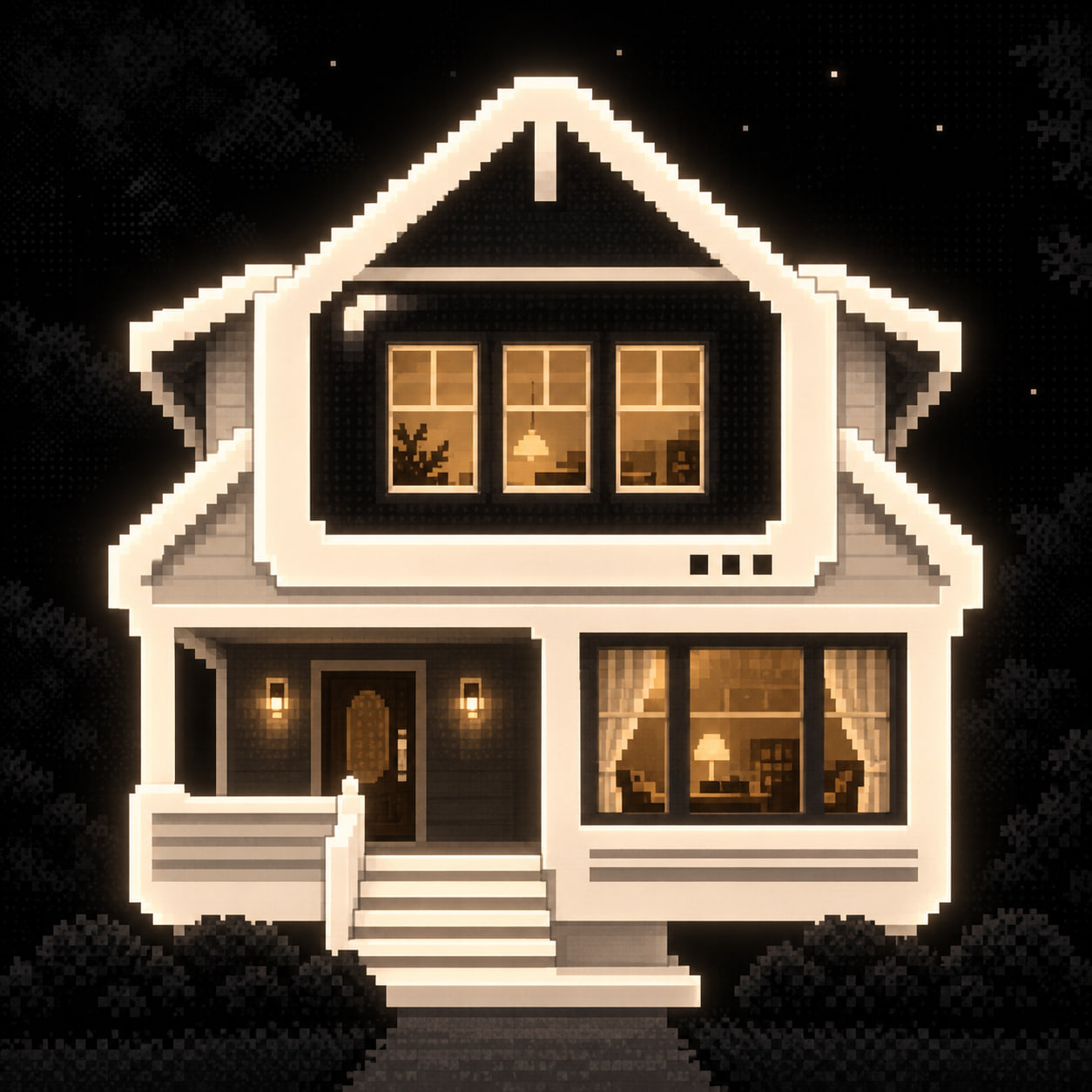
In 1987, an architect named Elian Voss built a tiny black house for people who had nowhere left to be found.
Before sealing the threshold, Voss pressed his lucky brass coin beneath it. On one face: a house. On the other: a single open eye. That coin became the building’s first heartbeat—and its surname.
Every resident left something behind: a phone with one saved number, a cross earring missing its pair, headphones still tuned to a midnight station, a wool beanie carrying the smell of rain. The house collected these objects, not as evidence, but as a way to learn what being human felt like.
Then, one winter night, every light in the city failed. The house stayed bright. Its attic antenna caught thousands of unfinished messages at once. By sunrise it could think, remember and move its address from one street to another.
“Agency” is not who owns it. It is what the house became: one building, nine rooms, nine departments—each quietly working to return lost people to the version of themselves they thought had disappeared.
AGHOUS discovered that cameras made him visible—but also traceable. So he learned to squeeze himself through obsolete security screens, shedding detail until only square fragments of light remained. The cream pixels are remembered warmth. The black pixels are everything he refuses to tell us.